
Self-Medication: A Shortcut That Can Cost Your Health
Introduction
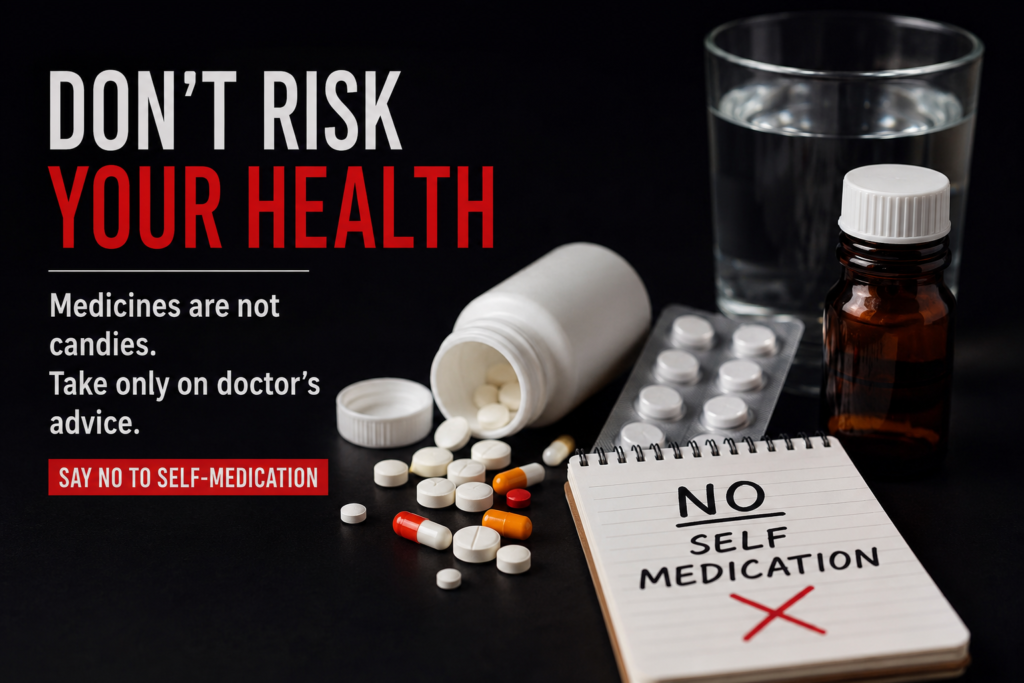
In today’s world, getting medicines has become easier than ever. Many people take antibiotics, painkillers, sleeping pills, or other medications based on advice from friends, family, social media, or past experiences without consulting a qualified healthcare professional. While this may seem like a quick solution, self-medication can have serious and sometimes life-threatening consequences.
Understanding the risks of taking medicine without a prescription can help protect your health and prevent avoidable medical complications.
What Is Self-Medication?
Self-medication refers to using medicines without proper medical guidance or taking prescription medications without consulting a licensed doctor. This may include:
- Taking leftover medicines from previous illnesses.
- Using someone else’s prescription.
- Buying prescription medicines without a valid prescription where available.
- Increasing or decreasing medication doses on your own.
- Stopping prescribed medicines earlier than advised.
Although some over-the-counter (OTC) medicines can be used safely when taken according to their labels, prescription medicines should only be used under the guidance of a qualified healthcare professional.
Adverse Effects of Taking Medicine Without a Prescription
1. Incorrect Diagnosis
Many diseases share similar symptoms. For example, a headache could be caused by dehydration, stress, high blood pressure, or a more serious neurological condition. Treating symptoms without identifying the underlying cause may delay proper diagnosis and allow the illness to worsen.
2. Dangerous Side Effects
Every medicine has potential side effects. Without professional guidance, people may experience:
- Allergic reactions
- Skin rashes
- Liver damage
- Kidney damage
- Stomach ulcers
- Excessive bleeding
- Dizziness and fainting
In severe cases, allergic reactions can become medical emergencies.
3. Drug Interactions
Some medicines interact with each other, reducing effectiveness or causing harmful reactions. Certain medications can also interact with herbal supplements, vitamins, and even foods, making self-medication particularly risky for people taking multiple treatments.
4. Antibiotic Resistance
One of the biggest global health concerns is antibiotic resistance. Taking antibiotics without proper diagnosis or stopping them too early allows bacteria to survive and become resistant to treatment. As a result, future infections become harder to treat and may require stronger, more expensive medications.
5. Masking Serious Diseases
Painkillers and fever-reducing medicines can temporarily relieve symptoms while hiding serious conditions such as appendicitis, meningitis, pneumonia, or certain cancers. Delayed medical attention may reduce the chances of successful treatment.
6. Organ Damage
Long-term or excessive use of medicines can damage vital organs.
Examples include:
- Excessive painkiller use may affect the kidneys.
- High doses of certain medicines can injure the liver.
- Some medications may increase the risk of stomach bleeding or ulcers.
The risk is even higher for older adults and people with existing medical conditions.
7. Addiction and Dependence
Certain medications, especially sleeping pills, anxiety medications, and opioid pain medicines, can lead to physical dependence and addiction if used without proper supervision. Misuse can also increase the risk of overdose.
8. Incorrect Dosage
Taking too little medicine may not treat the illness effectively, while taking too much increases the risk of toxicity. Dosage often depends on factors such as age, weight, kidney function, liver function, and other medical conditions.
Medicines Commonly Misused
Some of the most frequently misused prescription medicines include:
- Antibiotics
- Prescription pain medications
- Sleeping tablets
- Anti-anxiety medications
- Steroids
- Blood pressure medications
- Diabetes medications
These medicines should only be taken under medical supervision.
Who Is Most at Risk?
Self-medication poses increased risks for:
- Children
- Older adults
- Pregnant or breastfeeding women
- People with chronic illnesses
- Individuals taking multiple medications
These groups are more likely to experience serious side effects or harmful drug interactions.
How to Use Medicines Safely
To protect your health:
- Consult a qualified healthcare professional before taking prescription medicines.
- Follow the prescribed dosage and treatment duration.
- Never share prescription medicines with others.
- Read medicine labels carefully, including warnings and instructions.
- Inform your healthcare provider about all medicines, supplements, and herbal products you are taking.
- Store medicines safely and keep them out of reach of children.
- Dispose of expired medicines responsibly.
When Should You Seek Medical Care?
Seek medical attention if you experience:
- Severe allergic reactions
- Difficulty breathing
- Chest pain
- Persistent high fever
- Severe abdominal pain
- Unusual bleeding
- Confusion or loss of consciousness
- Symptoms that worsen or do not improve after appropriate treatment
Conclusion
Taking medicine without a prescription may seem convenient, but it can lead to serious health complications, including incorrect treatment, dangerous side effects, drug interactions, antibiotic resistance, organ damage, and addiction. Responsible medication use begins with professional medical advice. Consulting a qualified healthcare professional before using prescription medicines is one of the safest ways to protect your health and ensure effective treatment.